Tag: press release

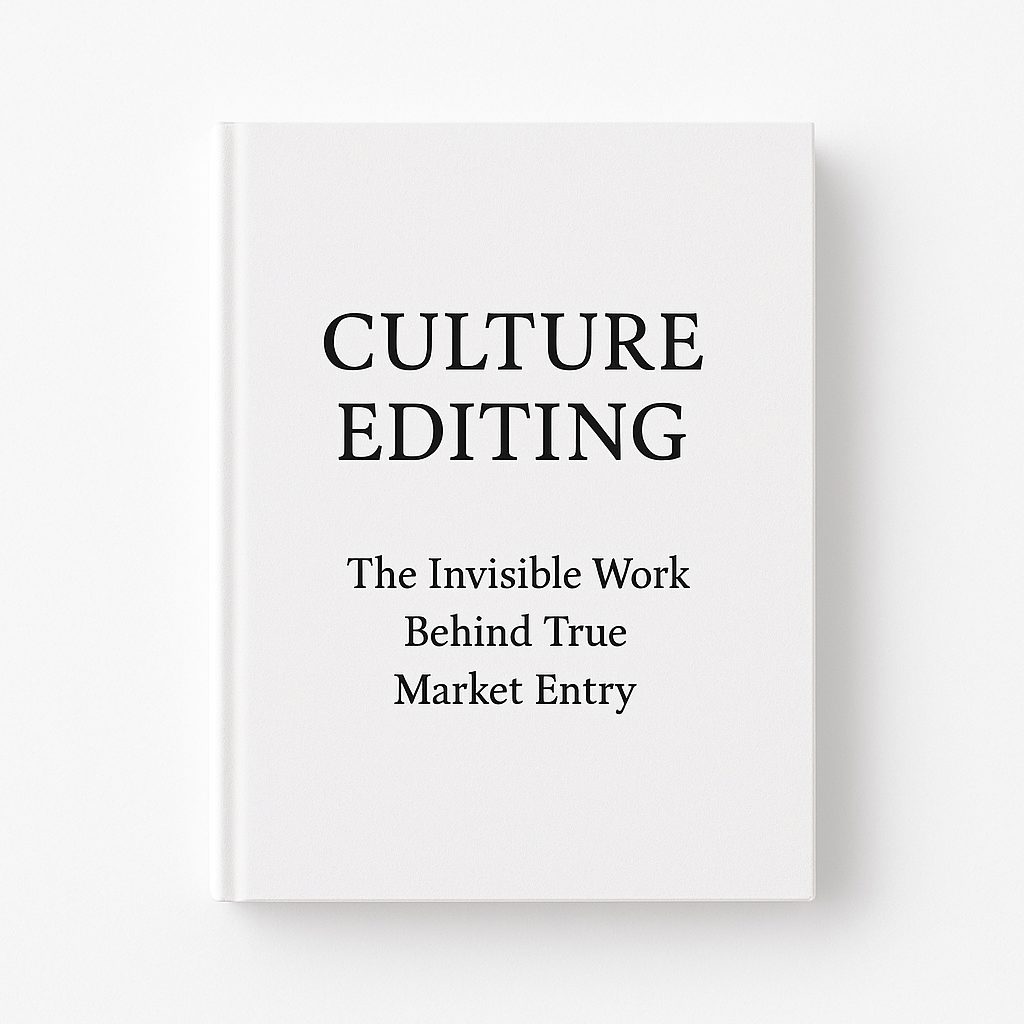
  • Culture Editing: The Invisible Work Behind True Market Entry in Japan

    Beyond Words: Why True Market Entry Demands Culture Editing

    When companies seek to enter new markets, they often focus on the surface.
    Translate the website. Adjust the currency. Swap in local images. Launch.

    It feels logical. It feels efficient.
    But in an era where AI can handle these tasks faster and cheaper than ever, surface-level adaptation is no longer enough to succeed.
    In fact, it’s no longer enough to even be noticed.

    The real challenge—and the real opportunity—lies deeper.

    At ablueblue, we call this deeper work Culture Editing.

    Culture Editing for Market Entry in Japan

    Culture Editing isn’t about “localizing” a product or service.
    It’s about understanding—and reshaping—the invisible frameworks that shape how people think, feel, and act within a particular culture.

    It’s about tuning into the silent assumptions, emotional patterns, and social rhythms that no machine translation or quick market entry strategy can truly capture.

    Here’s what many brands miss when entering Japan:

    Text is never just text.

    Words carry histories. Social expectations. Invisible codes.
    A slogan that sounds inspiring abroad can feel arrogant, tone-deaf, or naive in Japan, where subtlety and humility are valued above loud self-assertion.

    Media behaviors are culture-specific.

    How people consume information—the platforms they trust, the way they browse, the timing they respond to—is wired into local life.
    Assuming the same channels or rhythms will work everywhere is a costly mistake.

    Market “norms” don’t travel.

    Price sensitivity, brand loyalty, openness to innovation—these things don’t simply “transfer” from one country to another.
    They are shaped by decades of history, social fabric, and emotional priorities.

    No matter how brilliant your product is, if you enter Japan without editing these invisible layers, you risk speaking into a silence that doesn’t answer back.

    We have seen it happen.
    Campaigns fueled by passion abroad launched here—and were met with polite indifference.
    World-class products failed to land.
    Ambitious market entries dissolved into expensive silence.

    And when that happens, it’s not just the brand that suffers.
    It’s the partners, the media, the would-be customers.
    The energy and dreams that should have built connections are lost instead, caught in a conversation that never quite happens.

    Culture Editing is the difference between crossing into a market and merely floating at its edge.

    It’s the difference between being seen and being recognized.

    At ablueblue, we believe that cultural understanding isn’t a “nice-to-have.”
    It’s the foundation.

    It’s the careful, quiet, powerful work that ensures when you speak, your audience not only understands the words—but feels the meaning.

    It’s what makes the difference between marketing that exists, and marketing that lives.

    Because in a world where technology can replicate anything except human trust, building real understanding remains the rarest—and most valuable—advantage there is.

    Please feel free to contact us. Let’s talk!

  • How Well Does English Work in Japan’s Business Landscape?

    Foreign professionals often assume that simply speaking English will smooth their entry into Japan’s corporate world. In reality, language is just one piece of the puzzle. Whether you’re preparing a press release, exploring sourcing partnerships, or planning an international marketing campaign (including video content), understanding local norms is essential.

    English Proficiency: Myth vs. Reality

    Many international teams assume that English alone will unlock Japan’s business world—but it’s more nuanced:

    Large Corporations vs. SMEs
    Major firms may list English‑capable staff, yet those individuals often split time across departments or lack final approval authority.

    Multitasking Liaisons
    In smaller companies, the “English person” typically balances translation with core duties—so meetings fill up fast and follow‑ups can take longer.

    Cultivating Positive Partnerships

    Japanese companies value stability and thoughtful collaboration. To overcome any hesitation born from past experiences—like overly aggressive negotiations—consider:

    Build Trust Through Transparency
    When you issue a press release or share a sourcing proposal, provide clear, concise overviews alongside detailed appendices. This shows respect for their need to review thoroughly.

    Allow Time for Shared Understanding
    Japanese decision‑making tends to be risk‑averse. By giving teams space to ask questions—whether about a marketing plan or a video concept—you demonstrate patience and commitment.

    Collaborative Negotiation Style
    Frame discussions around mutual benefit rather than hard‑sell tactics. Gentle, give‑and‑take dialogue helps dispel any notion that you’re “just here to push a deal.”

    Beyond Language: 3 Critical Success Factors

    Translation ≠ Readiness
    Converting words is only step one—true readiness means understanding local workflows and expectations.

    Culture + Language + Experience
    Combine Japanese language skills with cultural insight and relevant industry know‑how to build credibility.

    Mutual Adaptation
    Some Japanese partners thrive on machine translation alone; others prefer personal touch. Success comes when both sides adjust and learn from each other.

    Let Us Help You Bridge the Gap

    Let us help you bridge the gap between your company and Japanese companies by combining linguistic fluency, cultural insight, and industry know‑how.

    Of course, business is built on human relationships, and we can’t promise 100% success. However, by drawing on our extensive experience and expertise, we’ll support you to the fullest extent possible—always aligned with your business objectives in Japan, whether you’re rolling out a press release, securing sourcing partners, or launching a global marketing/video initiative.

    Please feel free to contact us. Let’s talk!